Books
Below are my Goodreads books with some stats and reviews. Updated occasionally.
Currently reading
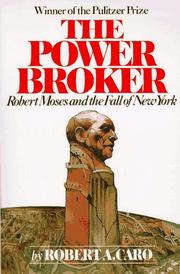
The Power Broker: Robert Moses and the Fall of New York
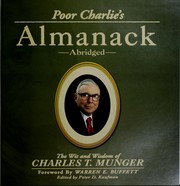
Poor Charlie's Almanack: The Wit and Wisdom of Charles T. Munger
Reading timeline
Every book I've read, newest first. Cover size tracks my rating, and a five-star read glows. Hover for the title; click a cover for the full review.
163 books
2026
2025
2024
2023
2022
2021
2020
2019
2018
2017
2016
2014
2010
Undated
Stats
163 books read
57,350 pages
10y median book age
309 median pages
270 in the antilibrary
The antilibrary — books on my wishlist but not yet read. At my recent pace of ~8.2 books a year, clearing it would take about 33 years. The unread pile is the point.
Books per year
Book age when read
Pages per book
Books read over time
An enjoyable read that flows nicely through the whole arc — Apple, NeXT, Pixar, and back to Apple. It sets out to paint a more human, balanced picture of Steve than the usual caricature, and on that score it succeeds.
What kept nagging at me was the author’s closeness to his subject. Schlender knew Jobs for decades as a journalist, and that relationship is clearly the book’s main credential — though at times it tips into name-dropping, and I couldn’t always tell where credibility ended and self-promotion began. The bigger effect is that the book reads less like a biography and more like an autobiography: the slightly rosy, retrospective angle you get when someone narrates a life and quietly glosses over the worst of the worst. The redemption arc is a little too clean as a result, even if the book is at least self-aware enough to flag that it wasn’t actually that tidy. So I wouldn’t call this a thorough biography — there are big gaps. In texture it’s closer to Shoe Dog or Made in America: a good high-level sense of how things changed, lots of detail glossed over, and still genuinely instructive and worth the time despite that.
What I take from it is mostly the stuff I’d already felt as a longtime Apple user. That design matters. That customers don’t always know what they want and can’t always explain it — but also the dark side of that conviction, in the first Apple era and at NeXT, where the products didn’t just sell themselves. The interesting tension is finding the balance between genuine taste and usability on one side, and actually listening to what people want (even when they can’t articulate it) on the other.
What kept nagging at me was the author’s closeness to his subject. Schlender knew Jobs for decades as a journalist, and that relationship is clearly the book’s main credential — though at times it tips into name-dropping, and I couldn’t always tell where credibility ended and self-promotion began. The bigger effect is that the book reads less like a biography and more like an autobiography: the slightly rosy, retrospective angle you get when someone narrates a life and quietly glosses over the worst of the worst. The redemption arc is a little too clean as a result, even if the book is at least self-aware enough to flag that it wasn’t actually that tidy. So I wouldn’t call this a thorough biography — there are big gaps. In texture it’s closer to Shoe Dog or Made in America: a good high-level sense of how things changed, lots of detail glossed over, and still genuinely instructive and worth the time despite that.
What I take from it is mostly the stuff I’d already felt as a longtime Apple user. That design matters. That customers don’t always know what they want and can’t always explain it — but also the dark side of that conviction, in the first Apple era and at NeXT, where the products didn’t just sell themselves. The interesting tension is finding the balance between genuine taste and usability on one side, and actually listening to what people want (even when they can’t articulate it) on the other.
Walton’s autobiography, written with John Huey as cancer was closing in, is a legacy document — not exactly a forensic biography. Whole decades get covered in a page or two. Read with that expectation set.
The substance holds up for me. The playbook is almost embarrassingly simple in retrospect: pass supplier savings to customers, accept thinner margins for volume, serve the small towns big retail wouldn’t touch. Satisfaction guaranteed as the quality floor. Empower the people closest to the customer. Push information up, not just down.
What’s striking is how deliberate the folksy stuff was. The Saturday morning meetings, the cheer, the relentless store visits — easy to read as charm, but it’s a coherent operating system, and one that functions as a filter for whether management can hack the culture.
Also a useful reminder that walking into competitors’ stores and taking notes is a perfectly legitimate strategy. Walton did it for forty years.
Caveats: I got more out of Shoe Dog as literature, and Titan as a business history. But the principles here are evergreen, and modern retail orgs seem to have quietly drifted from a fair few of them.
The substance holds up for me. The playbook is almost embarrassingly simple in retrospect: pass supplier savings to customers, accept thinner margins for volume, serve the small towns big retail wouldn’t touch. Satisfaction guaranteed as the quality floor. Empower the people closest to the customer. Push information up, not just down.
What’s striking is how deliberate the folksy stuff was. The Saturday morning meetings, the cheer, the relentless store visits — easy to read as charm, but it’s a coherent operating system, and one that functions as a filter for whether management can hack the culture.
Also a useful reminder that walking into competitors’ stores and taking notes is a perfectly legitimate strategy. Walton did it for forty years.
Caveats: I got more out of Shoe Dog as literature, and Titan as a business history. But the principles here are evergreen, and modern retail orgs seem to have quietly drifted from a fair few of them.
The central insight of this book was genuinely new to me: if you combine two assets that are negatively correlated — say, the S&P 500 and insurance on the S&P 500 — the portfolio can produce higher compounded growth over time than either asset alone. Not just lower risk. Higher growth. The mechanism is that reducing variance in the return path improves the geometric compounding, even if you’re paying a premium for the insurance. That’s counterintuitive and powerful, and Spitznagel explains it clearly.
To get there, the book walks through the history of probability and insurance — the Bernoullis, pirate insurance, the origins of expected value theory. I appreciated this. It grounds the mathematical argument in real stories and makes the framework feel earned rather than asserted. I also appreciated that the maths is present but kept accessible. You don’t need a quant background to follow the argument.
The main frustration is that Spitznagel doesn’t reveal how to actually implement the strategy. He spends a good portion of the book working through alternative “safe havens” — gold, bonds, trend-following, volatility strategies — and systematically showing why they don’t meet his criteria. You end up with a clear picture of what the ideal payoff shape looks like (convex, negatively correlated, cost-efficient) but not the specific trades. This is understandable — he runs a fund and these are his trade secrets — but it does leave you wanting. That said, between this book, Taleb’s work, and what’s publicly known about Universa’s approach, there’s enough to infer a direction if you’re willing to apply yourself.
I don’t think this detracts much from the book overall. The framework for evaluating whether a strategy qualifies as a genuine safe haven is arguably more valuable than a specific implementation, because implementations change while the principles don’t.
The book is short, which I appreciate. It makes its argument and stops.
This will probably have a significant impact on how I think about portfolio construction. I’m already looking at ways to apply the framework to my own investments, and I’m grateful for having a structured way to evaluate the options rather than just guessing at what “hedging” should look like.
Five stars.
To get there, the book walks through the history of probability and insurance — the Bernoullis, pirate insurance, the origins of expected value theory. I appreciated this. It grounds the mathematical argument in real stories and makes the framework feel earned rather than asserted. I also appreciated that the maths is present but kept accessible. You don’t need a quant background to follow the argument.
The main frustration is that Spitznagel doesn’t reveal how to actually implement the strategy. He spends a good portion of the book working through alternative “safe havens” — gold, bonds, trend-following, volatility strategies — and systematically showing why they don’t meet his criteria. You end up with a clear picture of what the ideal payoff shape looks like (convex, negatively correlated, cost-efficient) but not the specific trades. This is understandable — he runs a fund and these are his trade secrets — but it does leave you wanting. That said, between this book, Taleb’s work, and what’s publicly known about Universa’s approach, there’s enough to infer a direction if you’re willing to apply yourself.
I don’t think this detracts much from the book overall. The framework for evaluating whether a strategy qualifies as a genuine safe haven is arguably more valuable than a specific implementation, because implementations change while the principles don’t.
The book is short, which I appreciate. It makes its argument and stops.
This will probably have a significant impact on how I think about portfolio construction. I’m already looking at ways to apply the framework to my own investments, and I’m grateful for having a structured way to evaluate the options rather than just guessing at what “hedging” should look like.
Five stars.
I knew almost nothing about Nike's origin story going in - just the swoosh and the slogan. That blank slate made this book 100% worth the read.
Knight is a genuinely good writer. This reads like a novel - I kept picking it up wanting to know what happened next, which is not something I find in business books.
The story is a "band of misfits" narrative that will feel eerily familiar if you've spent time around tech startups. Knight didn't recruit polished operators because he couldn't - he was selling shoes out of his car. The people who showed up were the ones willing to work for a guy selling shoes out of his car.
That it worked is partly luck, partly that scrappy people are genuinely better in chaos.
What makes the book honest is how close Nike came to dying - repeatedly. The financing crises, the Onitsuka betrayal, the bank pulling credit. Knight doesn't retroactively claim he had a grand vision. He admits he was often one bad quarter from collapse, making decisions out of stubbornness and desperation as much as strategy. You can argue survivorship bias, and you'd be partly right, but there's something real about how high-stakes conviction creates options that cautious people never see.
I didn't know about him before reading the book, but the section on Pre's death is brutal. Knight doesn't overwrite it and that makes it even more devastating.
The personal cost is the quiet undercurrent. Knight's relationship with his wife - the fact that they stayed together through all of it - is actually remarkable given how many founders' marriages don't survive a fraction of this. His regrets about his sons are real and unresolved. He'd do it all again, which is both admirable and uncomfortable.
Read it if you care about running, startups, or what it actually costs to build something from nothing.
Five stars.
Knight is a genuinely good writer. This reads like a novel - I kept picking it up wanting to know what happened next, which is not something I find in business books.
The story is a "band of misfits" narrative that will feel eerily familiar if you've spent time around tech startups. Knight didn't recruit polished operators because he couldn't - he was selling shoes out of his car. The people who showed up were the ones willing to work for a guy selling shoes out of his car.
That it worked is partly luck, partly that scrappy people are genuinely better in chaos.
What makes the book honest is how close Nike came to dying - repeatedly. The financing crises, the Onitsuka betrayal, the bank pulling credit. Knight doesn't retroactively claim he had a grand vision. He admits he was often one bad quarter from collapse, making decisions out of stubbornness and desperation as much as strategy. You can argue survivorship bias, and you'd be partly right, but there's something real about how high-stakes conviction creates options that cautious people never see.
I didn't know about him before reading the book, but the section on Pre's death is brutal. Knight doesn't overwrite it and that makes it even more devastating.
The personal cost is the quiet undercurrent. Knight's relationship with his wife - the fact that they stayed together through all of it - is actually remarkable given how many founders' marriages don't survive a fraction of this. His regrets about his sons are real and unresolved. He'd do it all again, which is both admirable and uncomfortable.
Read it if you care about running, startups, or what it actually costs to build something from nothing.
Five stars.
John D. Rockefeller built Standard Oil into the most dominant monopoly in American history, controlling roughly 90% of US oil refining at its peak. When the Supreme Court broke it up in 1911, the fragments became ExxonMobil, Chevron, and several other companies that still dominate global energy today. Adjusted for inflation, he remains the wealthiest American who ever lived. He was also, by most accounts, a quiet, devout, routinely boring man who kept meticulous ledgers and avoided alcohol. Chernow's biography holds all of this together across 900 pages without ever simplifying it.
Chernow's achievement is scope without compromise. Rockefeller lived to 97 and touched almost every dimension of American life: industry, religion, philanthropy, politics, family. Chernow gives each the depth it deserves. The book is long because the life was long and consequential. I occasionally felt the length, but I can't point to a section that should have been cut.
What makes this book exceptional is Chernow's refusal to resolve the central contradiction. Rockefeller was simultaneously one of the most ruthless monopolists in American history and a devout Baptist who tithed from his first paycheck at sixteen. A man who deployed espionage and predatory rebates to crush competitors, then agonised over how to give the money away responsibly. Most biographers would pick a side. Chernow presents the evidence and lets you hold the tension. I appreciate that.
The oil industry's infancy is fascinating on its own terms - the chaos, the speculation, the sheer speed at which fortunes were made and lost. But it's also a window into how recently America was a fundamentally different place. The federal government barely existed as a regulatory force. Corporations operated in a vacuum that's hard to imagine today. The entire arc from frontier capitalism to antitrust regulation fits inside one man's career.
The philanthropy sections surprised me. You'd think giving away hundreds of millions would easy. Instead, it nearly broke his son psychologically and created operational problems rivalling Standard Oil itself. Every donation attracted scrutiny, begging letters, and accusations. The fact that they initially kept it quiet and held themselves to high standards of impact - not just writing cheques - suggests the conviction was at least partly genuine. You don't have a nervous breakdown over a PR strategy.
The relationship with his wife, Cettie, is quietly devastating. She absorbed the cost of his obsession, then slowly disappeared into illness while his daily and annual routines barely adjusted. Chernow doesn't editorialise, which makes it worse.
I'm heading to upstate New York and NYC this year, not far from where Rockefeller grew up and built his empire. I suspect the book will hit differently when I'm standing in those places.
Five stars. One of the best biographies I've read and sets a very high standard for any biographies I choose to read in future.
Chernow's achievement is scope without compromise. Rockefeller lived to 97 and touched almost every dimension of American life: industry, religion, philanthropy, politics, family. Chernow gives each the depth it deserves. The book is long because the life was long and consequential. I occasionally felt the length, but I can't point to a section that should have been cut.
What makes this book exceptional is Chernow's refusal to resolve the central contradiction. Rockefeller was simultaneously one of the most ruthless monopolists in American history and a devout Baptist who tithed from his first paycheck at sixteen. A man who deployed espionage and predatory rebates to crush competitors, then agonised over how to give the money away responsibly. Most biographers would pick a side. Chernow presents the evidence and lets you hold the tension. I appreciate that.
The oil industry's infancy is fascinating on its own terms - the chaos, the speculation, the sheer speed at which fortunes were made and lost. But it's also a window into how recently America was a fundamentally different place. The federal government barely existed as a regulatory force. Corporations operated in a vacuum that's hard to imagine today. The entire arc from frontier capitalism to antitrust regulation fits inside one man's career.
The philanthropy sections surprised me. You'd think giving away hundreds of millions would easy. Instead, it nearly broke his son psychologically and created operational problems rivalling Standard Oil itself. Every donation attracted scrutiny, begging letters, and accusations. The fact that they initially kept it quiet and held themselves to high standards of impact - not just writing cheques - suggests the conviction was at least partly genuine. You don't have a nervous breakdown over a PR strategy.
The relationship with his wife, Cettie, is quietly devastating. She absorbed the cost of his obsession, then slowly disappeared into illness while his daily and annual routines barely adjusted. Chernow doesn't editorialise, which makes it worse.
I'm heading to upstate New York and NYC this year, not far from where Rockefeller grew up and built his empire. I suspect the book will hit differently when I'm standing in those places.
Five stars. One of the best biographies I've read and sets a very high standard for any biographies I choose to read in future.
Housel is an excellent synthesizer and storyteller, and this book is deceptively easy to read - a skill that’s underappreciated until you try writing something half as accessible.
His core message - that spending is an art shaped by psychology, not a science solved by spreadsheets - lands well, and a few frameworks genuinely stuck: “minimize regret” as a spending heuristic, the danger of making money part of your identity, and the distinction between status spending and utility spending.
Some reservations: the “wealthy vs rich” framing is clever but he’s just redefining words to make a point. The chapter on greed and fear felt muddled. And because Housel leans heavily on stories and parables, it’s sometimes hard to know whether his advice is rigorous or just sounds persuasive - stories are memorable but they’re also cherry-picked.
If you’ve read Taleb, Kahneman, and Bogle, this is familiar territory in friendlier packaging. But that accessibility is precisely why I’m rounding up to 4 stars - most people would finish this book with a healthier relationship to money, and that’s worth something.
His core message - that spending is an art shaped by psychology, not a science solved by spreadsheets - lands well, and a few frameworks genuinely stuck: “minimize regret” as a spending heuristic, the danger of making money part of your identity, and the distinction between status spending and utility spending.
Some reservations: the “wealthy vs rich” framing is clever but he’s just redefining words to make a point. The chapter on greed and fear felt muddled. And because Housel leans heavily on stories and parables, it’s sometimes hard to know whether his advice is rigorous or just sounds persuasive - stories are memorable but they’re also cherry-picked.
If you’ve read Taleb, Kahneman, and Bogle, this is familiar territory in friendlier packaging. But that accessibility is precisely why I’m rounding up to 4 stars - most people would finish this book with a healthier relationship to money, and that’s worth something.
The first two parts are genuinely useful. Pressfield's personification of Resistance - that internal force that stops you from doing important work - is a practical psychological tool. It lets you recognise self-sabotage while it's happening. The amateur/professional distinction and the "Me, Inc" reframe are worth the read alone.
The third part on Muses and inspiration is weaker. If you're wired to find that stuff meaningful, it might work for you. I'm not, and it didn't. That said, "technology that artists have used for 3,000 years" deserves more respect than I initially gave it, even if I can't use it myself.
The uncomfortable part: Pressfield's personal life (failed marriages, family estrangement, broke until his 50s) raises questions about whether his model of relentless professional dedication actually produces a life worth living. The book doesn't grapple with this.
Read it for Parts 1-2. Skim Part 3. Then notice what you're avoiding and ask why.
The third part on Muses and inspiration is weaker. If you're wired to find that stuff meaningful, it might work for you. I'm not, and it didn't. That said, "technology that artists have used for 3,000 years" deserves more respect than I initially gave it, even if I can't use it myself.
The uncomfortable part: Pressfield's personal life (failed marriages, family estrangement, broke until his 50s) raises questions about whether his model of relentless professional dedication actually produces a life worth living. The book doesn't grapple with this.
Read it for Parts 1-2. Skim Part 3. Then notice what you're avoiding and ask why.
A book that very convincingly shows how data and analyses are easily manipulated or misunderstood if you’re not careful to tease out variables and cause and effect properly.
Wild ride. The first couple of hours felt like Stephenson was trying too hard - the 90s cyberpunk aesthetic is thick and takes some adjustment. But once I stopped fighting it and leaned into the absurdism, it started to click for me.
The prescience is genuinely impressive. The Metaverse concept, the franchise nation-states as social commentary (still relevant as gated communities and inequality entrench further), the hacker as countercultural hero before tech became The Establishment - all landed.
The Sumerian mythology angle is where it gets weird in a good way. Taking Dawkins' meme concept and extending it to "what if language itself could be a virus that hacks the brain's firmware" is bonkers, but internally consistent bonkers. The nam-shub of Enki as a patch that gave humanity free will by scrambling our deep linguistic structure? I'm here for it.
Main gripes: the ending is abrupt (a Stephenson trademark I'll struggle to accept), and the Metaverse locomotion mechanics are completely handwaved. You're just... moving. Don't think about it.
Worth reading as a foundational cyberpunk text and for the ideas. Not quite a page-turner, but rewarding if you give it some time.
The prescience is genuinely impressive. The Metaverse concept, the franchise nation-states as social commentary (still relevant as gated communities and inequality entrench further), the hacker as countercultural hero before tech became The Establishment - all landed.
The Sumerian mythology angle is where it gets weird in a good way. Taking Dawkins' meme concept and extending it to "what if language itself could be a virus that hacks the brain's firmware" is bonkers, but internally consistent bonkers. The nam-shub of Enki as a patch that gave humanity free will by scrambling our deep linguistic structure? I'm here for it.
Main gripes: the ending is abrupt (a Stephenson trademark I'll struggle to accept), and the Metaverse locomotion mechanics are completely handwaved. You're just... moving. Don't think about it.
Worth reading as a foundational cyberpunk text and for the ideas. Not quite a page-turner, but rewarding if you give it some time.
Written in a way you cannot put it down, so it's easy to forgive it for some of its small flaws. Highly recommended. The audiobook is incredible.
Incredible story. Audiobook version was great to listen to.
It will take some time to come to terms with the implications of this book properly.
The level of detail, the sources, the imagery, and the narrative format add up to perhaps the most horrifying and informative book I have ever read.
Incredibly highly recommended, and I hope that this review will convince even one other person to read it.
The level of detail, the sources, the imagery, and the narrative format add up to perhaps the most horrifying and informative book I have ever read.
Incredibly highly recommended, and I hope that this review will convince even one other person to read it.
Well worth the read. Some very practical advise on avoiding the pitfalls of black and white thinking and rather thinking probabilistically. Nothing fundamentally new, but packaged well and I appreciate the focus on truth seeking.
Thoroughly fun and engaging. Strong characters. Only critique is how improbable some of the plot lines are.
It is exactly what it says it is. Highly recommended for professionals who work often with data.
A very inspiring story - recommended. A grim reminder of the realities of war, and the dark side that potentially lurks in all of us.
I really enjoyed this book. Though I haven't read many biographies, this book answered many of the questions about Musk and his vision that I have asked myself. In my opinion it is a balanced take on a very peculiar (by most people's standards) but extremely significant person of this era.
It is a little dated at this stage (written in 2015), so the most value you get from the book is the origin story (which is engaging and rich).
It is a little dated at this stage (written in 2015), so the most value you get from the book is the origin story (which is engaging and rich).
Short, sweet. Shows super stupid things we all do when we ask questions to validate problems and alternatives. The audiobook is both the worst and best I've heard. The author kinda, like, talks, and it, like, could improve a lot with some very basic editing. But the natural style also often helps to emulate real conversations, which helps a lot.
Must read. I like the way the author zooms into detail / stories and then zooms out for macro discussions.
Looking at environmental impact through the lens of economic tradeoffs, this is a very interesting read. A lot of the book uses our current environmental/economic models to project into an uncertain future. I agree with the author that we can make better, more pragmatic tradeoffs by not invoking alarmism. There are known investments that yield good ROI for the (known) problems that we will face, and alarmists are doing themselves no favors by ignoring them.
That said, the book doesn’t touch the topic of what will could break the models being used. All models break, and it’s worth understanding how. What happens to the models if we see sudden ecological collapse? What happens if pollution not related to global warming does lasting damage? Perhaps these topics are addressed by research, but it’s not included in the book. And in my mind, there is a large amount of pessimism and fear about the future of our planet as a result of the “non-warming” environmental issues we’ve caused for our planet. Reducing the scope to only the warming aspect is OK, but it means that the author hasn’t been able to allay my natural fears of what we’re doing to the planet.
The book is still worth 4 stars in my opinion, given that the book is accessible, and has opened my eyes to how we can better apply economic thinking to the environmental debate. What is clear, is that current policy and alarmism is not helping anybody, and is even potentially doing more harm than good.
That said, the book doesn’t touch the topic of what will could break the models being used. All models break, and it’s worth understanding how. What happens to the models if we see sudden ecological collapse? What happens if pollution not related to global warming does lasting damage? Perhaps these topics are addressed by research, but it’s not included in the book. And in my mind, there is a large amount of pessimism and fear about the future of our planet as a result of the “non-warming” environmental issues we’ve caused for our planet. Reducing the scope to only the warming aspect is OK, but it means that the author hasn’t been able to allay my natural fears of what we’re doing to the planet.
The book is still worth 4 stars in my opinion, given that the book is accessible, and has opened my eyes to how we can better apply economic thinking to the environmental debate. What is clear, is that current policy and alarmism is not helping anybody, and is even potentially doing more harm than good.
I really like this book. Perfect reading for someone in their comfort zone who needs a shove to break out of their "mental prison".
What would happen if more people realized that they have more potential than they have been conditioned to believe? Or that there might be a higher purpose to pursue than the mundane things that you have become used to accepting?
What would happen if more people realized that they have more potential than they have been conditioned to believe? Or that there might be a higher purpose to pursue than the mundane things that you have become used to accepting?
Must read for anyone with start-up ambitions. Short, dense, enlightened.
There is a lot of substance to this book, though the style might not suit everyone. Follows from the Courage to be Disliked.
Concepts of self reliance, and what real happiness is and isn't are central to the book. There are many gems.
Definitely rereading this in the future.
Concepts of self reliance, and what real happiness is and isn't are central to the book. There are many gems.
Definitely rereading this in the future.
Impossible to review publicly. More people should read this
I am a sucker for more information on how the brain works, and how to apply that knowledge. I found the book to be a great explainer on the different "parts" of the brain, and how this influences the behavior of people growing up (with brains that are constantly changing).
The book has already been useful for me with our toddler, and I can imagine that re-reading it at a later stage will help again.
The book has already been useful for me with our toddler, and I can imagine that re-reading it at a later stage will help again.
It was fun to retrace Harris's steps in his journey to understanding the role of mindfulness and meditation in his life. It was a good intro for me (a natural skeptic), and makes me curious to explore meditation more.
It's hard for me to review this book because I only have a little training in philosophy and psychology.
That said, I really, really like the core concepts of Adlerian/Individual psychology. This book does a good job to communicate the core concepts in a way that is digestible.
I think the reason it resonates with me is that it reminds me of Stoicism. Things like "separation of tasks" is something that echos the concept of "sphere of control", i.e. only concerning yourself with what's in your control - your own actions, feelings, etc.
Living in the now, focusing on your own "tasks", understanding that (un)happiness finds its roots in interpersonal relationships, and developing "community feeling" - these are some of the things that you learn more about in the book. There are a few gems about inferiority and superiority complexes too. This book is definitely worth a second read.
Final note: I listened to this as an audiobook. It was an easy listen, though the delivery of the Socratic dialogue was sometimes a little grating (the "youth" is very volatile!). That said, five stars for content.
That said, I really, really like the core concepts of Adlerian/Individual psychology. This book does a good job to communicate the core concepts in a way that is digestible.
I think the reason it resonates with me is that it reminds me of Stoicism. Things like "separation of tasks" is something that echos the concept of "sphere of control", i.e. only concerning yourself with what's in your control - your own actions, feelings, etc.
Living in the now, focusing on your own "tasks", understanding that (un)happiness finds its roots in interpersonal relationships, and developing "community feeling" - these are some of the things that you learn more about in the book. There are a few gems about inferiority and superiority complexes too. This book is definitely worth a second read.
Final note: I listened to this as an audiobook. It was an easy listen, though the delivery of the Socratic dialogue was sometimes a little grating (the "youth" is very volatile!). That said, five stars for content.
As a person who is prone to making excuses and not pushing myself hard enough, I found this book to be an amazing wake-up call.
David Goggins’ story alone is compelling and motivating. He’s been an elite athlete and warrior despite having been dealt numerous bad hands as a kid and with his health. That transformation is incredible, and even if you don’t want to become an ultramarathon athlete, his story is inspirational.
What makes this more than just an inspirational story - a book I can recommend to anyone - are his insights into mental toughness. Things like owning your failures, finding power from previous victories, visualization, and more. Goggins may have taken mental toughness to a new level, and I don’t intend to follow him into Death Valley, but I am very grateful for his story.
I can highly recommend the audiobook version. It includes conversations between Goggins and his co-writer, clarifying parts of the book that may not have been clear in print. And like his interview with Joe Rogan, it humanizes him a little, and gives more unfiltered and raw insights.
David Goggins’ story alone is compelling and motivating. He’s been an elite athlete and warrior despite having been dealt numerous bad hands as a kid and with his health. That transformation is incredible, and even if you don’t want to become an ultramarathon athlete, his story is inspirational.
What makes this more than just an inspirational story - a book I can recommend to anyone - are his insights into mental toughness. Things like owning your failures, finding power from previous victories, visualization, and more. Goggins may have taken mental toughness to a new level, and I don’t intend to follow him into Death Valley, but I am very grateful for his story.
I can highly recommend the audiobook version. It includes conversations between Goggins and his co-writer, clarifying parts of the book that may not have been clear in print. And like his interview with Joe Rogan, it humanizes him a little, and gives more unfiltered and raw insights.
With a book like this the proof will be in applying the concepts, and seeing whether, if at all, they are effective. Without having done that yet, I can only say that the book lays out a compelling argument for using techniques that will help to negotiate more purposefully.
What’s great about this book is that there’s also a lot of overlap between how to use the concepts in other forms of conflict management (other than negotiations). Mirroring, labelling and asking calibrated (open-ended) questions are very effective techniques in both spaces.
Keen readers will see how the author used labelling (using the accusation audit concept) in the book itself to be more persuasive. What boggles my mind is even though I expected it, and could identify it, it was still effective.
Overall this is a great book about a skill that most people will benefit from, but I am hesitant to recommend it purely out of self-preservation!
What’s great about this book is that there’s also a lot of overlap between how to use the concepts in other forms of conflict management (other than negotiations). Mirroring, labelling and asking calibrated (open-ended) questions are very effective techniques in both spaces.
Keen readers will see how the author used labelling (using the accusation audit concept) in the book itself to be more persuasive. What boggles my mind is even though I expected it, and could identify it, it was still effective.
Overall this is a great book about a skill that most people will benefit from, but I am hesitant to recommend it purely out of self-preservation!
A case of "painfully obvious in retrospect". Very highly recommended for any person who wants to make an impact.
Builds off the core concepts in Business Model Generation, and extends that to a more personal level. How is it that you are delivering value? Who are your customers?
I think the borrowed concepts work very well in this domain too, and I would recommend that you go through the exercise of drawing out a canvas for yourself. It will help you understand more explicitly what the outcome of your work should be, and how you can improve.
Especially highly recommended if you are considering a career pivot or want to introspect about your career path.
I think the borrowed concepts work very well in this domain too, and I would recommend that you go through the exercise of drawing out a canvas for yourself. It will help you understand more explicitly what the outcome of your work should be, and how you can improve.
Especially highly recommended if you are considering a career pivot or want to introspect about your career path.
I am a big Adams fan, and have read all his previous books.
The central idea in the book is to use thinking techniques (i.e. mental models) from a variety of professions to help make sense of the world. Adams specifically looks at ways that people’s ways of thinking breaks down, and I often found that to be interesting.
Though I enjoyed reading the book, I cannot help but think that I learned 70%+ of what was in the book by occasionally watching one of his Periscope episodes or reading his tweets.
Another criticism is that Adams chose to use very specific current affairs events from the past two years to “prove” his points. I would have preferred more timeless examples, since the book would probably age better as a result. And perhaps the book wasn’t written to age well, and rather ride the hype train which is the divisiveness of US politics (it worked well for Adams with Win Bigly).
That said, the true test of a good book is how well it ages, and though the central ideas may age well, the examples will probably already feel dated for readers in 2021. I doubt I will read this book again.
The central idea in the book is to use thinking techniques (i.e. mental models) from a variety of professions to help make sense of the world. Adams specifically looks at ways that people’s ways of thinking breaks down, and I often found that to be interesting.
Though I enjoyed reading the book, I cannot help but think that I learned 70%+ of what was in the book by occasionally watching one of his Periscope episodes or reading his tweets.
Another criticism is that Adams chose to use very specific current affairs events from the past two years to “prove” his points. I would have preferred more timeless examples, since the book would probably age better as a result. And perhaps the book wasn’t written to age well, and rather ride the hype train which is the divisiveness of US politics (it worked well for Adams with Win Bigly).
That said, the true test of a good book is how well it ages, and though the central ideas may age well, the examples will probably already feel dated for readers in 2021. I doubt I will read this book again.
This isn't really about gamification, but much more about understanding human motivation and behavior. Definitely recommended - the substance is of this book is worth the five stars.
1984 feels like a book that must have been written very recently, not in the 1940s - it seems incredibly relevant. You might not find it fun to read, and the ending is one of the darkest, most tragic I have read in a while. That said, it wasn't written to be enjoyed - it was written to scare the living daylights out of you, and to make you consider what life means, and your relationship with your leaders.
Probably the best part of this book is how, once you've read it, you see Oceanian tactics in our own recent history. Were our leaders inspired by the Party and Big Brother instead of being scared of it ever happening?
Probably the best part of this book is how, once you've read it, you see Oceanian tactics in our own recent history. Were our leaders inspired by the Party and Big Brother instead of being scared of it ever happening?
Very compelling and surprisingly simple. Required reading!
Definitely worth reading by any IT professional. Good insights into best practices for increasing work throughput in IT organizations.
It is a "handbook" - don't expect that it reads like a novel (like Phoenix project). Speaking of Phoenix project, I recommend reading it before this book. Same for The Goal (Goldratt).
It is a "handbook" - don't expect that it reads like a novel (like Phoenix project). Speaking of Phoenix project, I recommend reading it before this book. Same for The Goal (Goldratt).
Classic reading from an advertising legend. Naturally, a lot isn't very applicable today, but there are many nuggets that are as applicable today as they will be in another 40 years. Focus on benefits to the user/consumer, be mindful of research results, and it often isn't worth reinventing wheel.
Definitely covers some very useful topics, but I couldn't help but wondering if the book would be better with less. Partially based on The Goal, it doesn't quite have that memorable story. Still definitely recommend.
Good primer on value investing, and packaged in a way that should be accessible to most.
A balanced look at what success means and how to attain it.
Ironically, the author's attempts to keep you interested with stories that act as a bridge between adjacent concepts makes it harder to follow the central points of the book. That said, the stories are interesting, and if you have a bit of patience the central points become a lot more obvious.
Ultimately I see this as a very good summary, a starting point, to how you can define success for yourself, with lots of useful guidance to set you off in the right direction. It isn't a game changing book, but certainly worth a read.
Ironically, the author's attempts to keep you interested with stories that act as a bridge between adjacent concepts makes it harder to follow the central points of the book. That said, the stories are interesting, and if you have a bit of patience the central points become a lot more obvious.
Ultimately I see this as a very good summary, a starting point, to how you can define success for yourself, with lots of useful guidance to set you off in the right direction. It isn't a game changing book, but certainly worth a read.
Fun little book to take your mind off of things. Personally found the story to have too many "gotchas", and unfortunately the length of the book doesn't give the author a chance to more deeply explain the dystopian world he sketches. All in all, though, very fun to read, and I can understand why it was quickly adapted for film.
Worth the read.
I struggle to accept that it is OK that the financial system should be that fragile that there are multiple "systemically important" institutions that need saving in crises, along with the too big to fail strategies that some follow. That said, Dalio is concerned with pragmatic outcomes - what's realistically achievable - and not idealism, which means that his blueprints might have very useful predictive ability (until they don't because of black swans).
I struggle to accept that it is OK that the financial system should be that fragile that there are multiple "systemically important" institutions that need saving in crises, along with the too big to fail strategies that some follow. That said, Dalio is concerned with pragmatic outcomes - what's realistically achievable - and not idealism, which means that his blueprints might have very useful predictive ability (until they don't because of black swans).
Game changer and very much worth the read.
Some of the book is filled with fluff, so don't expect to love the entire thing. The sections thar unpack how to form (or change) habits, and the impact habits have on our lives (and society) are eye opening, and actionable.
Some of the book is filled with fluff, so don't expect to love the entire thing. The sections thar unpack how to form (or change) habits, and the impact habits have on our lives (and society) are eye opening, and actionable.
People who hate Taleb (or his style) miss the point. A book like this is good because its central concept is valuable - not because it is polished or unpolished, or because the author is abrasive or not.
The concept of skin the game isn't new, but Taleb's take on it is well balanced and interesting. Worth a reread.
The concept of skin the game isn't new, but Taleb's take on it is well balanced and interesting. Worth a reread.
I struggled with this book. The content is rich and it does provide a very interesting perspective of 1920s Germany, but I was personally more interested in the specifics of the hyperinflation and mechanics surrounding it than all the political details included in the book.
Worth a read if you are interested in the era.
Worth a read if you are interested in the era.
Very focused on law and persuasion of juries (no surprise). That said, many of the concepts are transferable to other domains. I found it instructive as an applied use case of persuasion.
A Comprehensive, Multi-Dimensional, Cross-Disciplinary Analysis of Henry Hazlitt's "Economics in One Lesson: The Shortest & Surest Way to Understand Basic Economics"
## An Exercise in Verbose Intellectualism and Ironic Complexity
### By Dr. Machiel Reyneke, Ph.D., M.B.A., B.Sc., A.B.C., X.Y.Z.[1]
#### Abstract
This review aims to provide an exhaustive, and complex analysis of Henry Hazlitt's seminal work, "Economics in One Lesson." Through a labyrinthine exploration of the text, we shall endeavour to unpack, deconstruct, and ultimately reconstruct the author's attempt at simplifying economic principles. In doing so, we hope to demonstrate the futility of conciseness in academic discourse while simultaneously highlighting the book's core message through our own antithetical approach.
#### Introduction
In the vast pantheon of economic literature, few texts have achieved the level of notoriety and simplicity as Henry Hazlitt's "Economics in One Lesson." Published in 1946, this slender volume has, for decades, purported to distill the complex machinations of economic theory into a single, digestible lesson. However, as we shall see through our exhaustive analysis, the true nature of economics—much like this review—resists such reductionist approaches and demands a more nuanced, verbose, and ultimately confusing examination.
#### Section 1: The Paradox of Simplicity in Complex Systems
Hazlitt's audacious claim that economics can be understood through a single lesson is, in itself, a fascinating subject worthy of extensive study. To fully appreciate this concept, we must first delve into the philosophical underpinnings of simplicity and complexity.
As Aristotle once said, "The whole is greater than the sum of its parts."[2] This ancient wisdom, when applied to Hazlitt's work, raises the question: Can the vast, interconnected web of global economics truly be reduced to a singular lesson? To answer this, we must consider the nature of emergent properties in complex systems, drawing parallels between economic theory and quantum entanglement.
Consider, if you will, Schrödinger's cat[3]. The famous thought experiment posits a cat that is simultaneously alive and dead until observed. Similarly, one could argue that Hazlitt's "one lesson" exists in a superposition of states—both comprehensively explaining economics and failing to capture its complexity until the reader engages with the text. This quantum economic state, which we shall henceforth refer to as the "Hazlitt-Schrödinger Economic Principle" (HSEP), forms the foundation of our analysis.
#### Section 2: The Butterfly Effect and the Fallacy of Isolated Economic Actions
Hazlitt's central thesis, that the art of economics consists in looking not merely at the immediate but at the longer effects of any act or policy, inadvertently touches upon chaos theory and the butterfly effect[4]. To fully appreciate this connection, we must momentarily digress into the world of lepidopterology and its surprising relevance to economic thought.
[Figure 1: "The Butterfly Effect in Economic Policy" - a complex, incomprehensible flowchart linking butterfly wing flaps to global economic crises - redacted due to copyright infringement]
As we can clearly see from Figure 1, the flapping of a butterfly's wings in Brazil can, through a series of increasingly complex and unlikely events, lead to a stock market crash in New York. This illustration serves to underscore Hazlitt's point about the interconnectedness of economic actions, while simultaneously demonstrating the futility of attempting to predict or simplify such systems.
#### Section 3: A Linguistic Deconstruction of "One Lesson"
To truly understand Hazlitt's work, we must dissect the very title itself. The phrase "One Lesson" implies a singularity of knowledge, a monolithic truth that stands alone in its explanatory power. However, as any student of postmodern literary theory will attest, the very act of declaring a singular truth inevitably creates its own antithesis.
Thus, we are left with a paradoxical situation where the "One Lesson" simultaneously exists and does not exist—a sort of economic Schrödinger's lesson, if you will. This brings us back to our earlier HSEP, creating a self-referential loop that, much like this review, seems to lead nowhere while appearing profoundly meaningful.
#### Section 4: The Economics of Writing About Economics
In a meta-analytical twist, we must consider the economic implications of writing and publishing a book about economics. Hazlitt, in his pursuit of simplifying economic theory, has inadvertently created an economic event worthy of study in itself.
Consider the following equation:
```
V = (P * Q) - (MC + FC)
```
Where:
V = Value created by the book
P = Price of the book
Q = Quantity sold
MC = Marginal cost of production
FC = Fixed costs (including Hazlitt's time and intellectual capital)
This simplified model, of course, fails to account for numerous externalities, such as the opportunity cost of readers' time, the environmental impact of book production, and the potential long-term effects on economic policy resulting from the book's influence. A more comprehensive model would require several hundred additional variables and at least a dozen differential equations, which we shall leave as an exercise for the reader.
#### Section 5: Comparative Analysis Through Interpersonal Anecdotes
To truly grasp the significance of Hazlitt's work, we must view it through the lens of personal experience. Allow me to recount a seemingly unrelated incident that occurred during my childhood in Brussels, which I believe perfectly encapsulates the essence of "Economics in One Lesson."
[Redacted due to Goodreads review length restrictions. Several pages of a detailed, meandering story about a lost cat, a Belgian waffle stand, and a misunderstanding involving three different languages, concluding with a tenuous connection to opportunity cost]
...and that, dear reader, is why the search for my neighbour's cat taught me more about economics than any textbook ever could.
#### Conclusion(s)
1. Hazlitt's "Economics in One Lesson" is a triumph of simplification that paradoxically reveals the true complexity of economic systems.
2. The book fails to capture the nuanced, interconnected nature of global economics and should be disregarded entirely.
3. By attempting to distil economics into a single lesson, Hazlitt has created a work of accidental genius that transcends traditional economic theory.
4. The true value of "Economics in One Lesson" lies not in its content, but in the discussions and analyses it provokes, such as this review.
5. Economics, like this review, is ultimately incomprehensible and we should all take up interpretive dance instead.
#### Footnotes
[1] The author's credentials are as extensive as they are irrelevant and incorrect.
[2] Aristotle probably said this. If not, pretend he did for the sake of this review's credibility.
[3] No cats were harmed in the writing of this review.
[4] For a more in-depth exploration of chaos theory and its applications in economics, please refer to the author's forthcoming 17-volume work, "Chaos, Butterflies, and the Global Economy: A Study in Prolonged Academic Indulgence."
## An Exercise in Verbose Intellectualism and Ironic Complexity
### By Dr. Machiel Reyneke, Ph.D., M.B.A., B.Sc., A.B.C., X.Y.Z.[1]
#### Abstract
This review aims to provide an exhaustive, and complex analysis of Henry Hazlitt's seminal work, "Economics in One Lesson." Through a labyrinthine exploration of the text, we shall endeavour to unpack, deconstruct, and ultimately reconstruct the author's attempt at simplifying economic principles. In doing so, we hope to demonstrate the futility of conciseness in academic discourse while simultaneously highlighting the book's core message through our own antithetical approach.
#### Introduction
In the vast pantheon of economic literature, few texts have achieved the level of notoriety and simplicity as Henry Hazlitt's "Economics in One Lesson." Published in 1946, this slender volume has, for decades, purported to distill the complex machinations of economic theory into a single, digestible lesson. However, as we shall see through our exhaustive analysis, the true nature of economics—much like this review—resists such reductionist approaches and demands a more nuanced, verbose, and ultimately confusing examination.
#### Section 1: The Paradox of Simplicity in Complex Systems
Hazlitt's audacious claim that economics can be understood through a single lesson is, in itself, a fascinating subject worthy of extensive study. To fully appreciate this concept, we must first delve into the philosophical underpinnings of simplicity and complexity.
As Aristotle once said, "The whole is greater than the sum of its parts."[2] This ancient wisdom, when applied to Hazlitt's work, raises the question: Can the vast, interconnected web of global economics truly be reduced to a singular lesson? To answer this, we must consider the nature of emergent properties in complex systems, drawing parallels between economic theory and quantum entanglement.
Consider, if you will, Schrödinger's cat[3]. The famous thought experiment posits a cat that is simultaneously alive and dead until observed. Similarly, one could argue that Hazlitt's "one lesson" exists in a superposition of states—both comprehensively explaining economics and failing to capture its complexity until the reader engages with the text. This quantum economic state, which we shall henceforth refer to as the "Hazlitt-Schrödinger Economic Principle" (HSEP), forms the foundation of our analysis.
#### Section 2: The Butterfly Effect and the Fallacy of Isolated Economic Actions
Hazlitt's central thesis, that the art of economics consists in looking not merely at the immediate but at the longer effects of any act or policy, inadvertently touches upon chaos theory and the butterfly effect[4]. To fully appreciate this connection, we must momentarily digress into the world of lepidopterology and its surprising relevance to economic thought.
[Figure 1: "The Butterfly Effect in Economic Policy" - a complex, incomprehensible flowchart linking butterfly wing flaps to global economic crises - redacted due to copyright infringement]
As we can clearly see from Figure 1, the flapping of a butterfly's wings in Brazil can, through a series of increasingly complex and unlikely events, lead to a stock market crash in New York. This illustration serves to underscore Hazlitt's point about the interconnectedness of economic actions, while simultaneously demonstrating the futility of attempting to predict or simplify such systems.
#### Section 3: A Linguistic Deconstruction of "One Lesson"
To truly understand Hazlitt's work, we must dissect the very title itself. The phrase "One Lesson" implies a singularity of knowledge, a monolithic truth that stands alone in its explanatory power. However, as any student of postmodern literary theory will attest, the very act of declaring a singular truth inevitably creates its own antithesis.
Thus, we are left with a paradoxical situation where the "One Lesson" simultaneously exists and does not exist—a sort of economic Schrödinger's lesson, if you will. This brings us back to our earlier HSEP, creating a self-referential loop that, much like this review, seems to lead nowhere while appearing profoundly meaningful.
#### Section 4: The Economics of Writing About Economics
In a meta-analytical twist, we must consider the economic implications of writing and publishing a book about economics. Hazlitt, in his pursuit of simplifying economic theory, has inadvertently created an economic event worthy of study in itself.
Consider the following equation:
```
V = (P * Q) - (MC + FC)
```
Where:
V = Value created by the book
P = Price of the book
Q = Quantity sold
MC = Marginal cost of production
FC = Fixed costs (including Hazlitt's time and intellectual capital)
This simplified model, of course, fails to account for numerous externalities, such as the opportunity cost of readers' time, the environmental impact of book production, and the potential long-term effects on economic policy resulting from the book's influence. A more comprehensive model would require several hundred additional variables and at least a dozen differential equations, which we shall leave as an exercise for the reader.
#### Section 5: Comparative Analysis Through Interpersonal Anecdotes
To truly grasp the significance of Hazlitt's work, we must view it through the lens of personal experience. Allow me to recount a seemingly unrelated incident that occurred during my childhood in Brussels, which I believe perfectly encapsulates the essence of "Economics in One Lesson."
[Redacted due to Goodreads review length restrictions. Several pages of a detailed, meandering story about a lost cat, a Belgian waffle stand, and a misunderstanding involving three different languages, concluding with a tenuous connection to opportunity cost]
...and that, dear reader, is why the search for my neighbour's cat taught me more about economics than any textbook ever could.
#### Conclusion(s)
1. Hazlitt's "Economics in One Lesson" is a triumph of simplification that paradoxically reveals the true complexity of economic systems.
2. The book fails to capture the nuanced, interconnected nature of global economics and should be disregarded entirely.
3. By attempting to distil economics into a single lesson, Hazlitt has created a work of accidental genius that transcends traditional economic theory.
4. The true value of "Economics in One Lesson" lies not in its content, but in the discussions and analyses it provokes, such as this review.
5. Economics, like this review, is ultimately incomprehensible and we should all take up interpretive dance instead.
#### Footnotes
[1] The author's credentials are as extensive as they are irrelevant and incorrect.
[2] Aristotle probably said this. If not, pretend he did for the sake of this review's credibility.
[3] No cats were harmed in the writing of this review.
[4] For a more in-depth exploration of chaos theory and its applications in economics, please refer to the author's forthcoming 17-volume work, "Chaos, Butterflies, and the Global Economy: A Study in Prolonged Academic Indulgence."
Well worth the read. Interesting insights on breaking addiction and the relationship between pain and pleasure.
Detailed, interesting and very informative. An incredible read.
You might not like that Adams predicted the 2016 election correctly, but he did. This book explains some of the ways that he was able to do so. The book is filled with gems like the hierarchy of persuasion. A very easy read and definitely recommended, especially if you seem to struggle understanding what the hell is going on in the world of politics today.
Read this book.
I think the main challenge with this book's concepts (along with other similarly "unnatural" concepts like radical candor) is that instilling them in existing teams is hard, and often impractical. If everyone doesn't buy into the extreme ownership style, you will increase destructive conflict in your team.
That said, I would like to think that Extreme Ownership can become a massive lever for teams if they all buy into it.
There are a few gems in the book about team dynamics, about effective leadership, all packaged in a way that is very compelling.
I think the main challenge with this book's concepts (along with other similarly "unnatural" concepts like radical candor) is that instilling them in existing teams is hard, and often impractical. If everyone doesn't buy into the extreme ownership style, you will increase destructive conflict in your team.
That said, I would like to think that Extreme Ownership can become a massive lever for teams if they all buy into it.
There are a few gems in the book about team dynamics, about effective leadership, all packaged in a way that is very compelling.
I am a fan of Adams, and found this worth the read. Quick and mind-bending, the point isn't that this book is technically correct, but rather that your reality is not THE REALITY (if such a thing exists).
It's good to read books like this from time to time if you are a "realist" (read "pessimist). Recommended.
It's good to read books like this from time to time if you are a "realist" (read "pessimist). Recommended.
Is everything in this classic still valuable if you apply them verbatim? No.
Generally though, this book shows you how you can "tweak your own default settings", your approach, to be more persuasive and influential. Much of it might be obvious in hindsight - the mark of something remarkable.
Generally though, this book shows you how you can "tweak your own default settings", your approach, to be more persuasive and influential. Much of it might be obvious in hindsight - the mark of something remarkable.